The first argyle sock is at this point. I did the two repeats of the diamond pattern, then I worked a heel flap over the first half of the stitches, then turned the heel, and most recently I picked up 17 stitches on each side of the heel flap and worked the first row of the final diamond repeat on the instep. Now it is a matter of decreasing the gusset stitches and finishing the final diamond repeat. I feel the momentum is on my side! If this pair works out, I might eventually attempt to size up the chart and make a pair for Steve.
What I am reading: I have two audiobooks going at the moment: The Titan's Curse by Rick Riordan, listening to that with Quarta on the school commute; and The Shadow Rising by Robert Jordan from the Wheel of Time series. It's got 300 and umpteen chapters and it will probably be something to work on for the next two months.
Regular reading: The Life-Changing Magic of Tidying Up by Marie Kondo. It hasn't changed my life yet, but I haven't really done any, other than killing flying ants. Does that count? I finished Sejanus by David Wishart, in his Marcus Corvinus series of mysteries, and promptly checked out The Lydian Baker, which so far is much less political. After Sejanus, I guess you need a break. I also recently finished Rick Riordan's new book, Percy Jackson's Greek Heroes, which is a fun, wisecracking take on mythology, and is pretty much the logical conclusion of the way I annotate Myths of Greece and Rome for my 8th graders. I also just started The Legend of the Rift, the final book in the 7 wonders series by Peter Lerangis. A horrid thought occurs to me; will I be able to justify reading all these YA adventures and Roman historical fiction next year, when I am no longer teaching Latin to middle schoolers? Or will I have to grow up and read adult best-sellers or classics of indisputable literary quality? Nah.
Linking up to Ginny's Yarn-Along, where there are both masterful knitting projects and intriguing books to add to your queue.
Showing posts with label book reviews. Show all posts
Wednesday, March 9, 2016
Wednesday, July 16, 2014
Yarn-Along and a finish
It is a modest finish, a case for Daniel's Ipad mini, but this is my very first finished knitted project of 2014. That's just a little embarassing! But combined with my finish yesterday of the Celtic Solstice quilt top, I'm having a very productive July. I hope it continues.
I put a little pocket on the back so it can hold his earbuds. I want to make a similar one for my Kindle and one for Tertia's Samsung tablet eventually. I'm also binding off the lower hem of my "Mint Chocolate" sweater, which will leave the sleeves yet to do. I have pretty much given up on spinning during the Tour de Fleece, but who knows? Anything could happen.
I recently finished reading Mission at Nuremburg, by Tim Townsend. I highly recommend this book. It is the story of an American Lutheran pastor, Henry Gerecke, who in 1943 at the age of 50 decided to enlist as a chaplain in the Army, eventually becoming pastor to some of the most vile of the Nazi war criminals at the Nuremburg trials. It reads as a combination of military history, biography, and devotional theology. What level of compassion would it take for any of us to pray with and for men such as these, and come to see them as individuals, even friends? Material well worth pondering. It was especially meaningful to read with a young son in Basic Training; I tend to worry about him, and this book is a good reminder of what the American military looked like in the past, and that sometimes the simple things; human contact, love, forgiveness, attention to basic needs -- are the things that make the difference on the spiritual level as well.
Another book I highly recommend is Things that Matter, a collection of essays and lectures by Charles Krauthammer. He is a true intellectual renaissance man whose rich experience and life challenges have caused him to think deeply on a wide range of topics, and whose writing is a thing of beauty as few Beltway pundits ever achieve. From the space program to chess to bioethics to foreign policy, I found him inspiring. I listened to this as an audiobook, much of it read by Krauthammer himself, and I found myself agreeing with the vast majority of his thoughtful positions even if I differed on points of policy. The only irreconcilable difference between us is apparently the Oxford comma. And who knows? He may eventually convince me on that.
I put a little pocket on the back so it can hold his earbuds. I want to make a similar one for my Kindle and one for Tertia's Samsung tablet eventually. I'm also binding off the lower hem of my "Mint Chocolate" sweater, which will leave the sleeves yet to do. I have pretty much given up on spinning during the Tour de Fleece, but who knows? Anything could happen.
I recently finished reading Mission at Nuremburg, by Tim Townsend. I highly recommend this book. It is the story of an American Lutheran pastor, Henry Gerecke, who in 1943 at the age of 50 decided to enlist as a chaplain in the Army, eventually becoming pastor to some of the most vile of the Nazi war criminals at the Nuremburg trials. It reads as a combination of military history, biography, and devotional theology. What level of compassion would it take for any of us to pray with and for men such as these, and come to see them as individuals, even friends? Material well worth pondering. It was especially meaningful to read with a young son in Basic Training; I tend to worry about him, and this book is a good reminder of what the American military looked like in the past, and that sometimes the simple things; human contact, love, forgiveness, attention to basic needs -- are the things that make the difference on the spiritual level as well.
Another book I highly recommend is Things that Matter, a collection of essays and lectures by Charles Krauthammer. He is a true intellectual renaissance man whose rich experience and life challenges have caused him to think deeply on a wide range of topics, and whose writing is a thing of beauty as few Beltway pundits ever achieve. From the space program to chess to bioethics to foreign policy, I found him inspiring. I listened to this as an audiobook, much of it read by Krauthammer himself, and I found myself agreeing with the vast majority of his thoughtful positions even if I differed on points of policy. The only irreconcilable difference between us is apparently the Oxford comma. And who knows? He may eventually convince me on that.
Saturday, April 19, 2014
Randomday Book Roundup
It's been awhile. I blame my Kindle Fire. Here are some of the books I've been reading:
The Weed that Strings the Hangman's Bag, by Alan Bradley. In the second book in the series, the obnoxious but (very) vaguely endearing Flavia de Luce meddles in a grotesque murder involving traveling puppeteers, cannabis consumption, a tragic death of a young child, and friendly ex-Nazi fighter pilots in post-war Britain. I am enjoying this very well-written series, but as I am around at least one strong-willed 11-year-old constantly, I'm planning on spacing the books out. Flavia is better in small doses.
Elantris, by Brandon Sanderson. This stand-alone book by a prolifically imaginative author is intriguing, an exercise in world-building, with some insightful things to say about leadership, and some enjoyable characters. Even granting its fantasy world setting, though, the human characters are not completely human in some important aspects, and I found it off-putting, perhaps an offshoot of the author's Mormon religion. Daniel and I were able to attend his book-signing a few months ago, and he strikes me as truly talented and happy in his successful writing career, as well he should be. I look forward to reading more (preferably by audiobook) in the future.
Red Rabbit, by Tom Clancy, is one of the Jack Ryan series I had missed somewhere along the line. This one is set in the early 80's, and a young Ryan, through a series of completely improbable coincidences, becomes enmeshed with a Soviet defector who has important intelligence about the plot to kill Pope John Paul II. As always, the plot is a page-turner, the F-bomb shows up on just about every page, and the research is so well done that it's completely possible that large portions of the book are pretty close to the way it happened.
The Empire Striketh Back by Ian Doescher is the next episode in the Shakespearean rendering of the immortal epic. There's much to enjoy here: Yoda's haiku, R2D2's soliloquys, the Ugnaught chorus, Chewbacca and Leia's duet. There's an added scene where two random guards discuss the oddity of Imperial architecture that inexplicably requires hazardous, bottomless shafts to be inserted where anyone could stumble into them. It's a valid point, and even the bit characters get their moment on stage. I look forward to when the Jedi Doth Return.
Freddy and the Ignormus by Walter Brooks -- If you haven't yet encountered Freddy, one of the great pigs of children's literature, try to find one of the charming audiobooks at your local library. Full of old-fashioned wit and a cast of humorous animal characters, Freddy and friends are great for the under-10 set, and fun to read aloud, too.
Several other books are in process. Also making good progress is Italian. I'm almost to 1500 words in my DuoLingo vocabulary, and I've informed Steve he can take me to Italy any time now. They recently upgraded the Kindle Fire interface from the DuoLingo app I originally installed and in the process I discovered the online community and a lot more opportunities to enrich my own language study.
I'm not making much progress at all in quilting or knitting. Getting a little worried about next week's trip to Pennsylvania and the choir songs I'm supposed to have ready. My voice has not fully recovered from the walking pneumonia and my high notes are not what they should be. In fact, I have yet to sing more than 2 songs in practice without getting the cough back.
The Weed that Strings the Hangman's Bag, by Alan Bradley. In the second book in the series, the obnoxious but (very) vaguely endearing Flavia de Luce meddles in a grotesque murder involving traveling puppeteers, cannabis consumption, a tragic death of a young child, and friendly ex-Nazi fighter pilots in post-war Britain. I am enjoying this very well-written series, but as I am around at least one strong-willed 11-year-old constantly, I'm planning on spacing the books out. Flavia is better in small doses.
Elantris, by Brandon Sanderson. This stand-alone book by a prolifically imaginative author is intriguing, an exercise in world-building, with some insightful things to say about leadership, and some enjoyable characters. Even granting its fantasy world setting, though, the human characters are not completely human in some important aspects, and I found it off-putting, perhaps an offshoot of the author's Mormon religion. Daniel and I were able to attend his book-signing a few months ago, and he strikes me as truly talented and happy in his successful writing career, as well he should be. I look forward to reading more (preferably by audiobook) in the future.
Red Rabbit, by Tom Clancy, is one of the Jack Ryan series I had missed somewhere along the line. This one is set in the early 80's, and a young Ryan, through a series of completely improbable coincidences, becomes enmeshed with a Soviet defector who has important intelligence about the plot to kill Pope John Paul II. As always, the plot is a page-turner, the F-bomb shows up on just about every page, and the research is so well done that it's completely possible that large portions of the book are pretty close to the way it happened.
The Empire Striketh Back by Ian Doescher is the next episode in the Shakespearean rendering of the immortal epic. There's much to enjoy here: Yoda's haiku, R2D2's soliloquys, the Ugnaught chorus, Chewbacca and Leia's duet. There's an added scene where two random guards discuss the oddity of Imperial architecture that inexplicably requires hazardous, bottomless shafts to be inserted where anyone could stumble into them. It's a valid point, and even the bit characters get their moment on stage. I look forward to when the Jedi Doth Return.
Freddy and the Ignormus by Walter Brooks -- If you haven't yet encountered Freddy, one of the great pigs of children's literature, try to find one of the charming audiobooks at your local library. Full of old-fashioned wit and a cast of humorous animal characters, Freddy and friends are great for the under-10 set, and fun to read aloud, too.
Several other books are in process. Also making good progress is Italian. I'm almost to 1500 words in my DuoLingo vocabulary, and I've informed Steve he can take me to Italy any time now. They recently upgraded the Kindle Fire interface from the DuoLingo app I originally installed and in the process I discovered the online community and a lot more opportunities to enrich my own language study.
I'm not making much progress at all in quilting or knitting. Getting a little worried about next week's trip to Pennsylvania and the choir songs I'm supposed to have ready. My voice has not fully recovered from the walking pneumonia and my high notes are not what they should be. In fact, I have yet to sing more than 2 songs in practice without getting the cough back.
Wednesday, March 19, 2014
Yarn-Along, and a teeny bit of Work in Progress
It's Wednesday again and I have a bit of progress to report.
I have officially separated the stitches for the sleeves from the ones for the rest of the sweater. I think I finally got the math right and it's just more or less basic knitting from here. This is Mint Chocolate, a free Drops pattern that I am heavily modifying. The yoke alone was my Ravelympics project. All the yarn has been sitting unloved in my stash for too long, but I like the combination of colors. Now for the slow process of knitting the rest of the sweater.
Over last weekend Steve helped me figure out what has been going wrong with my Amazon links. See, I signed up for the Amazon associates program, which means that if anyone wanted to click through to Amazon and order through the link on the right sidebar, or from any individual product link I put in the text of a blog post, a portion of the order would benefit our family. But something about Blogger didn't get along with Amazon, and none of my links were actually good. So after Steve's tutorial, I'm going to try to put in the links for the books I've been reading. Hopefully the links from here on will be good... I enjoy writing about books, but I just don't have terribly good computer skills!
I've been listening to the audiobook version of Brandon Sanderson's fantasy novel Elantris. Daniel and I attended Sanderson's book signing a few weeks ago for his latest novel, and I've read The Rithmatist, a much shorter book for the YA market. Elantris is an interesting world of political and religious intrigue, where the main character, a prince, wakes up one morning to find himself dead - or something very like it. It's long, though. 66 chapters, but who's counting?
Another book I'm still slogging through is Carthage Must Be Destroyed by Richard Miles. Ancient history is always fun for me.
In quilting, a teeny tiny bit of progress: Celtic Solstice is just a few long border seams away from being a finished top. Twelve border seams, actually. Still, not too much more to go. And I've begun the slow and painstaking process of seaming together the diamonds for the Rainbow String Star I'm working on, inspired by the Santa Fe String Star in Bonnie Hunter's book String Fling. Very excited about how this one looks in my mind's eye, anyway!
Check out the other linkups at Ginny's Yarn-Along and Lee's WIP Wednesday.
I have officially separated the stitches for the sleeves from the ones for the rest of the sweater. I think I finally got the math right and it's just more or less basic knitting from here. This is Mint Chocolate, a free Drops pattern that I am heavily modifying. The yoke alone was my Ravelympics project. All the yarn has been sitting unloved in my stash for too long, but I like the combination of colors. Now for the slow process of knitting the rest of the sweater.
Over last weekend Steve helped me figure out what has been going wrong with my Amazon links. See, I signed up for the Amazon associates program, which means that if anyone wanted to click through to Amazon and order through the link on the right sidebar, or from any individual product link I put in the text of a blog post, a portion of the order would benefit our family. But something about Blogger didn't get along with Amazon, and none of my links were actually good. So after Steve's tutorial, I'm going to try to put in the links for the books I've been reading. Hopefully the links from here on will be good... I enjoy writing about books, but I just don't have terribly good computer skills!
I've been listening to the audiobook version of Brandon Sanderson's fantasy novel Elantris. Daniel and I attended Sanderson's book signing a few weeks ago for his latest novel, and I've read The Rithmatist, a much shorter book for the YA market. Elantris is an interesting world of political and religious intrigue, where the main character, a prince, wakes up one morning to find himself dead - or something very like it. It's long, though. 66 chapters, but who's counting?
Another book I'm still slogging through is Carthage Must Be Destroyed by Richard Miles. Ancient history is always fun for me.
In quilting, a teeny tiny bit of progress: Celtic Solstice is just a few long border seams away from being a finished top. Twelve border seams, actually. Still, not too much more to go. And I've begun the slow and painstaking process of seaming together the diamonds for the Rainbow String Star I'm working on, inspired by the Santa Fe String Star in Bonnie Hunter's book String Fling. Very excited about how this one looks in my mind's eye, anyway!
Check out the other linkups at Ginny's Yarn-Along and Lee's WIP Wednesday.
Wednesday, March 12, 2014
Magistra's Day Off
"All me life flashed before me eyes. It was really borin'."
- Babs the knitting hen in Chicken Run
So what has Carpe Lanam been up to lately, since she clearly hasn't been blogging? Not much that is blogworthy, that's for sure. I've been busy, yes. I've been trying to shake the cold that has been plaguing me since Christmas. Now, with the Ides of March fast approaching, is the busiest time of year for Latin teachers. I'm kind of at the eye of the hurricane today, since I had the day off. This is because my classes are all taking the National Latin Exam today and, by the very specific rules, the Latin teachers can't be present for that. I guess they're afraid we'd coach our kids or something. It's a welcome break, particularly since last Saturday I spent the day ferrying kids to the Latin Olympika, yesterday I was at school all day for an inservice, and tomorrow I'll be ferrying kids to practice for the Spring program, and next week will be both parent-teacher conferences AND the pretest for the final, and the end of the 3rd quarter is just a week after that.
This morning dawned sunny -- wow! And Tertia is naturally sunny. She dressed up because she was supposed to give a presentation about rainbows in science class. I started to try to steer her towards more carefully coordinated clothing, but then I decided that her ragamuffin chic fashion sense is pretty okay and anyone who doesn't like it is the one with the problem. She wanted to pose with the other flowers. She can blend in with the bed of daffodils, right?And just then the bus came along and she was off. We had the big meetings last week for her evaluation and IEP... I'm impressed by how much her teachers genuinely like her. It makes it a little easier sending her off to school when I can't be there with her every day to watch over her. High School next year, though. That's gonna be hard.
The violets have been pretty lately. A few more days of this sun and I might be able to get rid of the sore throat/ cough thing.
Daffodils. That's what happening in our yard in March. Lots and lots of daffodils.
Since there was no school for me this morning, I did my weekly grocery run early, when Winco is less crowded. I had a couple of appointments already scheduled for the afternoon even before I knew I would have the day off. I scrubbed a toilet and unloaded the dishwasher and cleaned Malvolio's fish tank for the first time in I'm embarrassed to say how long. After a bit I will make Mongolian Beef for supper with this recipe I pinned, and then I need to take the girls to buy new shoes.
And - the knitting. So yesterday I discovered a slight error in my math calculations for the yoke, picked back 1.5 rows and added two extra stitches on the section that will eventually become the sleeves. I think I have a handle on it but I'm not completely sure even yet. I need to lengthen the yoke by about an inch before I separate for the sleeves, and the speckled pattern has to be worked over a multiple of 6 + 1, and I am a better Latin teacher than a math teacher. I'm craving an evening where I can just sit and knit, but that's not so very likely. No progress on sewing or quilting this week at all.
Books in brief:
I've almost finished The Sweetness at the Bottom of the Pie by Alan Bradley. I like it but I'm not sure I like the heroine, Flavia de Luce, a rather horrible 11-year-old girl with a disturbing interest in deadly poisons. I recently finished Branded: the Buying and Selling of Teenagers, by Alissa Quart, a dated (ten years in popu culture IS dated) bit of social criticism on the over-commercialization of American teenagers. It was assigned reading for all teachers, and I suppose there is helpful information in it, but it annoyed me with its hand-wringing without any prescription to fix the problem. And since I believe the author is secular, I felt that the only prescriptive advice she would have given in any case would be for government intervention. It made me a bit more cynical as we began reading the now thoroughly dated (30 years) classic, Amusing Ourselves to Death, by Neil Postman. Can a classic be dated? Well, it merits further discussion after I've made it through the whole thing, but I was annoyed at the outset by Postman's assertion that it is impossible to "do" political philosophy (or any other important work of the mind) on television. Really? I'm pretty sure that I've seen George Will, among others, "do" it many times, quite capably. I'm working on an idea, something about reverse chronological snobbery and dystopian literature, as if somehow our era (or the 1980's, in this case) is the most at risk of cultural collapse of any era in human history. But as I say, I should really bear with it through reading the whole book before I do a full book report. This is just a teaser. Speaking of cultural collapse, I am about halfway through Carthage MVST Be Destroyed, by Richard Miles, which provides a lot of insight into the decline and fall of a civilization that one of the 5th graders, bless his heart, guessed was located in Australia at the Latin Olympika. Study of the ancient Carthaginian culture is very helpful to understanding ancient Rome and also the culture of ancient Near East in Bible times. Africa, not Australia.
Labels:
book reviews,
family,
Latin,
random,
school,
yarn-along
Wednesday, January 29, 2014
WIP Wednesday and Yarn-Along
It's kind of been an exhausting, discouraging week. Lots of grading, headaches, kids with drama, sore back, upset stomachs, broken stuff, insomnia, etc. But I have managed a little bit of knitting and sewing.
The second interminable argyle sock has been advanced by almost 2/3 of a diamond. I am resolutely not yet thinking about how I'm going to handle it if I run out of the blue. I'm reading some oldie-but-goodie books. Don't Panic... Dinner's in the Freezer is responsible for the beef stroganoff brewing in the crockpot as I type. These ladies came to speak at my MOPS group in the mid-90's in Denver, when Daniel and Secundus were little. If you like to have meals frozen and ready to go for your family, this book and its sequel are very nice. And I recently read Emily Goes to Exeter and am working on its sequel, Belinda Goes to Bath, by M.C. Beaton - or as she was known at the time of their original publication, Marion Chesney. These are fun, frivolous Regency romances with witty and enjoyable characters (she went on to write the Hamish MacBeth and Agatha Raisin mystery series). This is the "Travelling Matchmaker" series about a housekeeper who has received a small income that allows her to seek adventure on the stagecoaches of the day. Hannah Pym will be a recurring character in each of the six books; the people she interacts with change with each book, and there is always a somewhat humorous happy ending. I used to check these books out of the library around the same time as I was schlepping little kids to MOPS. I seems like a long time ago now. I borrowed these through the Amazon Prime lending library. I've been browsing free books and I'm also reading A Charming Crime by Tonya Kappes, which has fun elements but certainly doesn't rise to the quality of writing in the Beaton books. Check out what others are knitting and reading at the yarn-along over at Ginny's blog. And in the quilting world, Celtic Solstice is maybe halfway seamed together, and draped along the Megaquilter table where I'm lazily working on the Farmer's Wife. You can see the stack of blocks from the APQ quiltalong peeking out on the left. So, as January winds down, I'm not really finished with any of my goals for the month, but making small progress on them at least. Check out what other quilters are doing over at Freshly Pieced.
Friday, December 30, 2011
2011 Reading Challenge Recap
For the last 3 years now I have kept track of all the books or book-equivalents I've read, in a thread in the Ravelry Book Challenge group. What... doesn't everybody use a social networking site for knitters to keep track of books read? It makes perfect sense to me. I met my goal of reading 100 books in 2011. I do have a somewhat flexible definition of "book" and "read." I count audiobooks, magazines (as long as I've read almost all of the issues in a year), craft books, children's books, and lecture series or classes. It all goes to the improving of the mind. Mostly. I find it helpful to categorize my reading by the categories of fiction (which includes all fiction, bedtime stories for the kids as well as what I read for fun), craft-related nonfiction/ how-to, and other nonfiction.
I've managed a good number of book reviews on the blog (* beside the books I remember doing; I don't have time to link back to all of them now but you can search tags for "book review") and am planning to review a few of these still. If you want to request a review of one of these that I haven't already done, drop me a comment! I love doing book reviews. I've got similar goals for 2012 reading, and will be trying to work in more reviews.
Fiction:
(1) Inkspell, Cornelia Funke (audiobook) Jan.
(2) Emperor: Time’s Tapestry Book 1, Stephen Baxter, Jan. *
(3) Calling on Dragons, Patricia Wrede (audiobook), Jan.
(4) Teatime for the Traditionally Built, Alexander McCall Smith, Jan. *
(5) Letters from Pemberley, Jane Dawkins, Jan. *
(6) Persona non Grata, Ruth Downie, Feb. *
(7) Little House in the Big Woods, Laura Ingalls Wilder, Feb.
(8) The Five Fakirs of Faizabad, P.B. Kerr, Feb. *
(9) The Double Comfort Safari Club, Alexander McCall Smith, Feb. *
(10) Death of a Valentine, M.C. Beaton, Mar. *
(11) Septimus Heap book 1: Magyk, Angie Sage, (audiobook), March *
(12) The Overton Window, Glenn Beck, March *
(13) Septimus Heap 2: Flyte, Angie Sage, March *
(14) Little Men, Louisa May Alcott, (audiobook) March *
(15) How Right You Are, Jeeves, P.G. Wodehouse, (audiobook with Ian Carmichael), Apr. *
(16) Journey to the Center of the Earth, Jules Verne, (audiobook) Apr. *
(17) The Sign of Four, Arthur Conan Doyle, (audiobook) Apr. *
(18) Vanity Fair, William Thackeray, (audiobook, partial) Apr.
(19) Septimus Heap 3: Physik, Angie Sage, Apr. *
(20) King of Shadows, Susan Cooper, (audiobook with Jim Dale) Apr. *
(21) Septimus Heap 4: Queste, Angie Sage, Apr. *
(22) Septimus Heap 5: Syren, Angie Sage, May *
(23) Freddy the Pilot, Walter Brooks (audiobook), May
(24) Dove Song, Kristine Franklin, June *
(25) Minders, Diana Hendry, June
(26) Saturnalia, Lindsey Davis, June
(27) Septimus Heap 6: Darke, Angie Sage, July *
(28) Clan of the Cave Bear, Jean Auel, July *
(29) The Child’s Homer, Padraic Colum, (audiobook) July *
(30) Good Masters! Sweet Ladies! Laura Amy Schlitz (audiobook) July *
(31) The Time Machine, H.G. Wells, (audiobook) July *
(32) The Rummy Affair of Old Biffy, P.G. Wodehouse, (audiobook) July *
(33) Howard Pyle’s Book of Pirates (audiobook) July *
(34) The Valley of Horses, Jean Auel, Aug.
(35) Redwall, Brian Jaques, Aug.
(36) Harry Potter and the Sorcerer’s Stone, J.K. Rowling, Aug. *
(37) Guardians of Gahoole book 1: The Capture, Kathryn Lasky, (audiobook) Aug.
(38) Harry Potter and the Chamber of Secrets, J.K. Rowling, Aug. *
(39) Harry Potter and the Prisoner of Azkaban, J.K. Rowling, Sep. *
(40) Harry Potter and the Goblet of Fire, J.K. Rowling, Sep. *
(41) Guardians of Gahoole book 2: The Journey, Kathryn Lasky (audiobook) Oct.
(42) North by Northanger, Carrie Bebris, Oct.
(43) Harry Potter and the Order of the Phoenix, J.K. Rowling, Oct.
(44) Conqueror, Time’s Tapestry book 2, Stephen Baxter, Oct.
(45) Charlotte Collins, Jennifer Becton, Oct.
(46) Death of a Chimney Sweep, M.C. Beaton, Oct.
(47) Little House on the Prairie, Laura Ingalls Wilder, Oct.
(48) The Saturday Big Tent Wedding Party, Alexander McCall Smith, Nov.
(49) Son of Neptune, Rick Riordan, Nov.
(50) Harry Potter and the Half-Blood Prince, J.K. Rowling, Dec.
(51) The Gray Wolf and other stories, George MacDonald, Dec.
(52) Inkdeath, Cornelia Funke (audiobook) Dec.
(53) Harry Potter and the Deathly Hallows, J.K. Rowling, Dec.
Nonfiction, craft-related:
(1) Alice Starmore’s Book of Fair Isle Knitting, Jan.
(2) Sweater Quest: My Year of Knitting Dangerously, Adrienne Martini , Jan. *
(3) Knitting America, Susan Strawn, Feb.
(4) Socks from the Toe Up, Wendy Johnson, Feb.
(5) A Knitter’s Almanac, Elizabeth Zimmerman, March
(6) Tudor Roses, Alice Starmore, March
(7) Quilts en Provence, Kaffe Fassett, Apr.
(8) Quilt Romance, Kaffe Fassett, May
(9) Blogging for Dummies, May *
(10) The IT Girls’ Guide to Blogging with Moxie, May *
(11) Best of Fons & Porter Scrap Quilts, Sept.
(12) The Farmer’s Wife Sampler Quilt, Laurie Aaron Hird, Sept.
(13) 1001 Patchwork Designs, Maggie Malone, Sept.
(14) ABCs of Longarm Quilting, Patricia Barry, Nov.
(15) Lots of Scraps, It’s time to Quilt, Stauffer and Hatch, Nov.
(16) Denyse Schmidt Quilts, Nov.
(17) More Quilts from the Quiltmaker’s Gift, Joanne Line, Nov.
(18) Log Cabin Quilts with Attitude, Sharon Rotz, Nov.
(19) The Gentle Art of Knitting, Jane Brockett, Dec.
Nonfiction, philosophy, history, language, etc:
(1) The 10 Big Lies about America, Michael Medved, Jan.
(2) Clutter Cure, Judi Culbertson, Jan. *
(3) Textiles: 5000 years, Harris, Feb.
(4) Into the Region of Awe: Mysticism in C.S. Lewis, David C. Downing, Feb. *
(5) What’s so Great about Christianity, Dinesh D’Souza, March *
(6) 365 Ways to Drive a Liberal Crazy, James Delingpole, Apr.
(7) If Democrats had any Brains, They’d be Republicans, Ann Coulter, Apr. *
(8) Shipwreck at the Bottom of the World, Jennifer Armstrong, May *
(9) The “American Way”: Family and Community in the Shaping of the American Identity, Allan Carlson, May *
(10) Henle Latin I, May
(11) Henle Latin II, May
(12) An Unexpected Journey: Discovering Reformed Christianity, W. Robert Godfrey, May *
(13) Myths of Greece and Rome, H.A. Guerber, June *
(14) Life After Death: The Evidence, Dinesh D’Souza, June *
(15) Godless, Ann Coulter, June *
(16) Before the Flood:the Biblical flood as a real event and how it changed the course of civilization, Ian Wilson, July *
(17) The Teaching Company: Popes and the Papacy: a History, Thomas F. X. Noble, (CDs) July
(18) The Golden Bough, James Frazer, July *
(19) Demonic: How the Liberal Mob is Endangering America, Ann Coulter, August *
(20) Veritas Teacher Training conference 2011 lecture series, Matt Whitling et al., Aug.
(21) 1st OPC Summer Bible Study on Joshua, Tom Bradshaw, Aug.
(22) The Parthenon Code: Mankind’s History in Marble, Robert Johnson, Sept. *
(23) Sister Bernadette’s Barking Dog, Kitty Burns Florey, Sept. *
(24) 1st OPC Sunday School class on Westminster Confession, Dec.
(25) Muzzled, Juan Williams, Dec.
(26) World Magazine, 2011
(27) and (28) The Old and New Testaments. Counting this as 2 books (instead of 66), this brings me to a total of 100 books. I followed a chronological reading plan.
I've managed a good number of book reviews on the blog (* beside the books I remember doing; I don't have time to link back to all of them now but you can search tags for "book review") and am planning to review a few of these still. If you want to request a review of one of these that I haven't already done, drop me a comment! I love doing book reviews. I've got similar goals for 2012 reading, and will be trying to work in more reviews.
Fiction:
(1) Inkspell, Cornelia Funke (audiobook) Jan.
(2) Emperor: Time’s Tapestry Book 1, Stephen Baxter, Jan. *
(3) Calling on Dragons, Patricia Wrede (audiobook), Jan.
(4) Teatime for the Traditionally Built, Alexander McCall Smith, Jan. *
(5) Letters from Pemberley, Jane Dawkins, Jan. *
(6) Persona non Grata, Ruth Downie, Feb. *
(7) Little House in the Big Woods, Laura Ingalls Wilder, Feb.
(8) The Five Fakirs of Faizabad, P.B. Kerr, Feb. *
(9) The Double Comfort Safari Club, Alexander McCall Smith, Feb. *
(10) Death of a Valentine, M.C. Beaton, Mar. *
(11) Septimus Heap book 1: Magyk, Angie Sage, (audiobook), March *
(12) The Overton Window, Glenn Beck, March *
(13) Septimus Heap 2: Flyte, Angie Sage, March *
(14) Little Men, Louisa May Alcott, (audiobook) March *
(15) How Right You Are, Jeeves, P.G. Wodehouse, (audiobook with Ian Carmichael), Apr. *
(16) Journey to the Center of the Earth, Jules Verne, (audiobook) Apr. *
(17) The Sign of Four, Arthur Conan Doyle, (audiobook) Apr. *
(18) Vanity Fair, William Thackeray, (audiobook, partial) Apr.
(19) Septimus Heap 3: Physik, Angie Sage, Apr. *
(20) King of Shadows, Susan Cooper, (audiobook with Jim Dale) Apr. *
(21) Septimus Heap 4: Queste, Angie Sage, Apr. *
(22) Septimus Heap 5: Syren, Angie Sage, May *
(23) Freddy the Pilot, Walter Brooks (audiobook), May
(24) Dove Song, Kristine Franklin, June *
(25) Minders, Diana Hendry, June
(26) Saturnalia, Lindsey Davis, June
(27) Septimus Heap 6: Darke, Angie Sage, July *
(28) Clan of the Cave Bear, Jean Auel, July *
(29) The Child’s Homer, Padraic Colum, (audiobook) July *
(30) Good Masters! Sweet Ladies! Laura Amy Schlitz (audiobook) July *
(31) The Time Machine, H.G. Wells, (audiobook) July *
(32) The Rummy Affair of Old Biffy, P.G. Wodehouse, (audiobook) July *
(33) Howard Pyle’s Book of Pirates (audiobook) July *
(34) The Valley of Horses, Jean Auel, Aug.
(35) Redwall, Brian Jaques, Aug.
(36) Harry Potter and the Sorcerer’s Stone, J.K. Rowling, Aug. *
(37) Guardians of Gahoole book 1: The Capture, Kathryn Lasky, (audiobook) Aug.
(38) Harry Potter and the Chamber of Secrets, J.K. Rowling, Aug. *
(39) Harry Potter and the Prisoner of Azkaban, J.K. Rowling, Sep. *
(40) Harry Potter and the Goblet of Fire, J.K. Rowling, Sep. *
(41) Guardians of Gahoole book 2: The Journey, Kathryn Lasky (audiobook) Oct.
(42) North by Northanger, Carrie Bebris, Oct.
(43) Harry Potter and the Order of the Phoenix, J.K. Rowling, Oct.
(44) Conqueror, Time’s Tapestry book 2, Stephen Baxter, Oct.
(45) Charlotte Collins, Jennifer Becton, Oct.
(46) Death of a Chimney Sweep, M.C. Beaton, Oct.
(47) Little House on the Prairie, Laura Ingalls Wilder, Oct.
(48) The Saturday Big Tent Wedding Party, Alexander McCall Smith, Nov.
(49) Son of Neptune, Rick Riordan, Nov.
(50) Harry Potter and the Half-Blood Prince, J.K. Rowling, Dec.
(51) The Gray Wolf and other stories, George MacDonald, Dec.
(52) Inkdeath, Cornelia Funke (audiobook) Dec.
(53) Harry Potter and the Deathly Hallows, J.K. Rowling, Dec.
Nonfiction, craft-related:
(1) Alice Starmore’s Book of Fair Isle Knitting, Jan.
(2) Sweater Quest: My Year of Knitting Dangerously, Adrienne Martini
(3) Knitting America, Susan Strawn, Feb.
(4) Socks from the Toe Up, Wendy Johnson, Feb.
(5) A Knitter’s Almanac, Elizabeth Zimmerman, March
(6) Tudor Roses, Alice Starmore, March
(7) Quilts en Provence, Kaffe Fassett, Apr.
(8) Quilt Romance, Kaffe Fassett, May
(9) Blogging for Dummies, May *
(10) The IT Girls’ Guide to Blogging with Moxie, May *
(11) Best of Fons & Porter Scrap Quilts, Sept.
(12) The Farmer’s Wife Sampler Quilt, Laurie Aaron Hird, Sept.
(13) 1001 Patchwork Designs, Maggie Malone, Sept.
(14) ABCs of Longarm Quilting, Patricia Barry, Nov.
(15) Lots of Scraps, It’s time to Quilt, Stauffer and Hatch, Nov.
(16) Denyse Schmidt Quilts, Nov.
(17) More Quilts from the Quiltmaker’s Gift, Joanne Line, Nov.
(18) Log Cabin Quilts with Attitude, Sharon Rotz, Nov.
(19) The Gentle Art of Knitting, Jane Brockett, Dec.
Nonfiction, philosophy, history, language, etc:
(1) The 10 Big Lies about America, Michael Medved, Jan.
(2) Clutter Cure, Judi Culbertson, Jan. *
(3) Textiles: 5000 years, Harris, Feb.
(4) Into the Region of Awe: Mysticism in C.S. Lewis, David C. Downing, Feb. *
(5) What’s so Great about Christianity, Dinesh D’Souza, March *
(6) 365 Ways to Drive a Liberal Crazy, James Delingpole, Apr.
(7) If Democrats had any Brains, They’d be Republicans, Ann Coulter, Apr. *
(8) Shipwreck at the Bottom of the World, Jennifer Armstrong, May *
(9) The “American Way”: Family and Community in the Shaping of the American Identity, Allan Carlson, May *
(10) Henle Latin I, May
(11) Henle Latin II, May
(12) An Unexpected Journey: Discovering Reformed Christianity, W. Robert Godfrey, May *
(13) Myths of Greece and Rome, H.A. Guerber, June *
(14) Life After Death: The Evidence, Dinesh D’Souza, June *
(15) Godless, Ann Coulter, June *
(16) Before the Flood:the Biblical flood as a real event and how it changed the course of civilization, Ian Wilson, July *
(17) The Teaching Company: Popes and the Papacy: a History, Thomas F. X. Noble, (CDs) July
(18) The Golden Bough, James Frazer, July *
(19) Demonic: How the Liberal Mob is Endangering America, Ann Coulter, August *
(20) Veritas Teacher Training conference 2011 lecture series, Matt Whitling et al., Aug.
(21) 1st OPC Summer Bible Study on Joshua, Tom Bradshaw, Aug.
(22) The Parthenon Code: Mankind’s History in Marble, Robert Johnson, Sept. *
(23) Sister Bernadette’s Barking Dog, Kitty Burns Florey, Sept. *
(24) 1st OPC Sunday School class on Westminster Confession, Dec.
(25) Muzzled, Juan Williams, Dec.
(26) World Magazine, 2011
(27) and (28) The Old and New Testaments. Counting this as 2 books (instead of 66), this brings me to a total of 100 books. I followed a chronological reading plan.
Tuesday, August 9, 2011
Book Reviews: Paleolithic Lit
You never know where a curious mind will take you. Because I knit, I joined Ravelry. There I interacted with people who assume you're mentally deficient if you don't embrace evolution. So I read up on the Intelligent Design debate, which is Ground Zero for atheism vs. any logical system of thought. Because I'm a Latin teacher with a background in literature, I'm curious about the origins of the ancient myths. If I had a time machine, I'd be going back into the pre-Abrahamic era to find out as much as possible about the stories they told, who travelled where, and how they did things. I'm pretty sure that's where most of our myths started out. The challenging thing, of course, is that we can never know for sure. For all our talk about carbon dating and Young Earth vs. Old Earth, we can't observe that time period directly. So, why are modern scholars so quick to deconstruct one of the few written documents that claims to describe that era? Hmm. Here are three books I've looked at recently that play with prehistory in one way or another.
The Golden Bough: A Study in Magic and Religion, by James G. Frazer.
Genre: Anthropology? Comparative religion? Mythology? Philosophy? New Age/Wicca? Gnosticism? Could be any and all of them.
I skimmed this one. It's really long, even in abridged form. And it's all built around one idea: sympathetic magic (human and animal sacrifice, fertility rituals, etc.) is the basis of all religion. By implication, Christianity is just one more example among thousands of the myth of the dying and rising god. This is considered a seminal work in the field of anthropology, and it had an incalculable influence on the intellectuals who wrote the literature of the 20th century. Also, if you're ever inducted into the language honor society Alpha Mu Gamma, loyalty to the Golden Bough forms a part of the quaint/silly secret initiation ceremony. I presume it's this golden bough and not the original one that Virgil wrote about. Frazer adopts the superior attitude of modern anthropologists, even referring to primitive societies as "savages." He skips around a lot: the peoples he describes are united by similarity of customs, not historical era or geographical area. I'd like to return to this at some point when I have more patience for it. Even if you disagree with his premise, he successfully created the mythology of the modern era: i.e., that the old stories are all equally true, which means, of course, that they are all equally false. His work definitely forms a part of the Great Conversation.
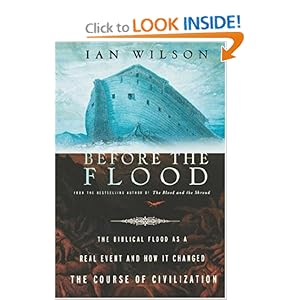
Before the Flood: The Biblical Flood as a Real Event and How it Changed the Course of Civilization, by Ian Wilson.
Genre: Archaeology, history, literature, marine science. This was a fascinating book. The author is not a creationist attempting to prove the book of Genesis; the Black Sea flood at the end of the Ice Age, Noah's flood, and accounts from the Gilgamesh epic and other ancient accounts are presumed to be identical, and therefore the flood would not have been worldwide in scope. The author takes an interdisciplinary approach, describing the Black Sea flood as documented by Ryan and Pitman and explored by Robert Ballard, postulating Turkey rather than the Fertile Crescent as the cradle of civilization, and pursuing tantalizing clues in ancient texts like Gilgamesh and the Argonautica. Much of it is by necessity speculative; much (but not all) of the speculation is compelling. I loved reading about the archaeological excavation of Catal Huyuk in Turkey. I was less thrilled with the case built around the worship of bulls and the Great Mother goddess: Wilson spends a lot of time describing these widespread practices as being the ancient norm, including a matriarchal society and promiscuous sex. He bemoans the overturn of this culture and the rise of patriarchy -- OK, we get it, this is the obligatory modernist distancing of self from the Biblical tradition. Despite this, the book is enjoyable, readable proof that not all modern secular scholars dismiss Genesis altogether.
The Clan of the Cave Bear, by Jean Auel
Genre: Historical Fantasy. Why I read it: I was curious, of course -- what other reason is there? So in the '80's when everyone else was reading this I was underage, and THIS IS DEFINITELY NOT A BOOK FOR CHILDREN. But there's something charming about the premise of this long-lasting 6-book series: a young Cro-Magnon girl, suddenly orphaned and homeless after a cataclysmic earthquake, adopted and brought up by a clan of kindly Neanderthals. Part of the fun of historical fiction is learning what life was like in the old days... this is one author's speculation about life in the really old days. You learn about knapping flint for knives other tools, how to hunt wooly mammoths and butcher them and dry their meat, and what plants Neanderthals used for medicinal purposes. All very intriguing; but unfortunately, the impression I was left with was that it seems very dated now. Not enough of "Little Cave on the Steppe" and too much proto-feminist manifesto, with a little bit of potboiler to swing it in the other direction entirely. Ayla is a likable enough protagonist, and Creb the wise man and Iza the medicine woman are even lovable. But the Neanderthals are a dead end of evolution, and Ayla's departure is inevitable. I suspect that Ayla singlehandedly will advance early humans from Paleolithic to bronze age over the next several books -- but I'm not likely to read the later books based on the reviews on Amazon.
The intriguing questions for me relate to the modern assumptions that prehistoric humans were less intelligent -- yet this story has even the non-verbal Neanderthals capable of living in an orderly social group, with laws and traditions consistent over generations and every member of the Clan performing necessary work. The only things they can't figure out are how to count beyond 20 and where babies come from. Then I look at modern young people, who diligently check the social media for the next scheduled riot but who couldn't cook dinner if they had to harvest the ingredients from their backyard rather than the local bistro, and have not even the faintest idea of basic economics, and I wonder if the technological age has really advanced us all that much?
The Golden Bough: A Study in Magic and Religion, by James G. Frazer.
Genre: Anthropology? Comparative religion? Mythology? Philosophy? New Age/Wicca? Gnosticism? Could be any and all of them.
I skimmed this one. It's really long, even in abridged form. And it's all built around one idea: sympathetic magic (human and animal sacrifice, fertility rituals, etc.) is the basis of all religion. By implication, Christianity is just one more example among thousands of the myth of the dying and rising god. This is considered a seminal work in the field of anthropology, and it had an incalculable influence on the intellectuals who wrote the literature of the 20th century. Also, if you're ever inducted into the language honor society Alpha Mu Gamma, loyalty to the Golden Bough forms a part of the quaint/silly secret initiation ceremony. I presume it's this golden bough and not the original one that Virgil wrote about. Frazer adopts the superior attitude of modern anthropologists, even referring to primitive societies as "savages." He skips around a lot: the peoples he describes are united by similarity of customs, not historical era or geographical area. I'd like to return to this at some point when I have more patience for it. Even if you disagree with his premise, he successfully created the mythology of the modern era: i.e., that the old stories are all equally true, which means, of course, that they are all equally false. His work definitely forms a part of the Great Conversation.
Before the Flood: The Biblical Flood as a Real Event and How it Changed the Course of Civilization, by Ian Wilson.
Genre: Archaeology, history, literature, marine science. This was a fascinating book. The author is not a creationist attempting to prove the book of Genesis; the Black Sea flood at the end of the Ice Age, Noah's flood, and accounts from the Gilgamesh epic and other ancient accounts are presumed to be identical, and therefore the flood would not have been worldwide in scope. The author takes an interdisciplinary approach, describing the Black Sea flood as documented by Ryan and Pitman and explored by Robert Ballard, postulating Turkey rather than the Fertile Crescent as the cradle of civilization, and pursuing tantalizing clues in ancient texts like Gilgamesh and the Argonautica. Much of it is by necessity speculative; much (but not all) of the speculation is compelling. I loved reading about the archaeological excavation of Catal Huyuk in Turkey. I was less thrilled with the case built around the worship of bulls and the Great Mother goddess: Wilson spends a lot of time describing these widespread practices as being the ancient norm, including a matriarchal society and promiscuous sex. He bemoans the overturn of this culture and the rise of patriarchy -- OK, we get it, this is the obligatory modernist distancing of self from the Biblical tradition. Despite this, the book is enjoyable, readable proof that not all modern secular scholars dismiss Genesis altogether.
The Clan of the Cave Bear, by Jean Auel
Genre: Historical Fantasy. Why I read it: I was curious, of course -- what other reason is there? So in the '80's when everyone else was reading this I was underage, and THIS IS DEFINITELY NOT A BOOK FOR CHILDREN. But there's something charming about the premise of this long-lasting 6-book series: a young Cro-Magnon girl, suddenly orphaned and homeless after a cataclysmic earthquake, adopted and brought up by a clan of kindly Neanderthals. Part of the fun of historical fiction is learning what life was like in the old days... this is one author's speculation about life in the really old days. You learn about knapping flint for knives other tools, how to hunt wooly mammoths and butcher them and dry their meat, and what plants Neanderthals used for medicinal purposes. All very intriguing; but unfortunately, the impression I was left with was that it seems very dated now. Not enough of "Little Cave on the Steppe" and too much proto-feminist manifesto, with a little bit of potboiler to swing it in the other direction entirely. Ayla is a likable enough protagonist, and Creb the wise man and Iza the medicine woman are even lovable. But the Neanderthals are a dead end of evolution, and Ayla's departure is inevitable. I suspect that Ayla singlehandedly will advance early humans from Paleolithic to bronze age over the next several books -- but I'm not likely to read the later books based on the reviews on Amazon.
The intriguing questions for me relate to the modern assumptions that prehistoric humans were less intelligent -- yet this story has even the non-verbal Neanderthals capable of living in an orderly social group, with laws and traditions consistent over generations and every member of the Clan performing necessary work. The only things they can't figure out are how to count beyond 20 and where babies come from. Then I look at modern young people, who diligently check the social media for the next scheduled riot but who couldn't cook dinner if they had to harvest the ingredients from their backyard rather than the local bistro, and have not even the faintest idea of basic economics, and I wonder if the technological age has really advanced us all that much?
Thursday, July 28, 2011
Summer Listening - book reviews
Catching up on the audiobooks we listened to recently:
The Rummy Affair of Old Biffy, by P.G. Wodehouse, features some stories that I believe were excerpted from Carry On, Jeeves. I've talked about Wodehouse before -- if you haven't made his acquaintance yet, it's time. Jeeves and Wooster stories are a really good place to start.
Popes and the Papacy: a History, by Thomas F. X. Noble for the Teaching Company, was a fascinating and surprisingly fast-moving overview. In 24 lectures on 12 CDs, we go from "the Rise of the Petrine Idea" to Benedict XVI and beyond. From my professional perspective, I would have appreciated a deeper exploration of the era from the Apostolic age to the fall of Rome -- but of course that's just the era for which we have very few records. Basically, the bishops of Rome were the last responsible adults left standing after the Roman emperors retreated to Constantinople and the barbarians invaded. Hearing about the corruption of the medieval popes is enough to raise any Protestant's hackles; the lecturer is doubtless Catholic because he doesn't probe too deeply here, but neither does he gloss over the less stellar moments of the papacy. This was the first Teaching Company lecture series we listened to, but I'm sure it won't be the last.
Howard Pyle's Book of Pirates is children's lit of an earlier era. I always loved his Robin Hood, and in recent years we've listened to audiobooks of Otto of the Silver Hand and Men of Iron: he seems to be one of the classic authors who is well liked by librarians. I think this is more of a compilation of unrelated stories, put together by a later editor. They're fun, not too deep, and of course fit in with the recent Disneyland theme.
The Rummy Affair of Old Biffy, by P.G. Wodehouse, features some stories that I believe were excerpted from Carry On, Jeeves. I've talked about Wodehouse before -- if you haven't made his acquaintance yet, it's time. Jeeves and Wooster stories are a really good place to start.
Popes and the Papacy: a History, by Thomas F. X. Noble for the Teaching Company, was a fascinating and surprisingly fast-moving overview. In 24 lectures on 12 CDs, we go from "the Rise of the Petrine Idea" to Benedict XVI and beyond. From my professional perspective, I would have appreciated a deeper exploration of the era from the Apostolic age to the fall of Rome -- but of course that's just the era for which we have very few records. Basically, the bishops of Rome were the last responsible adults left standing after the Roman emperors retreated to Constantinople and the barbarians invaded. Hearing about the corruption of the medieval popes is enough to raise any Protestant's hackles; the lecturer is doubtless Catholic because he doesn't probe too deeply here, but neither does he gloss over the less stellar moments of the papacy. This was the first Teaching Company lecture series we listened to, but I'm sure it won't be the last.
Howard Pyle's Book of Pirates is children's lit of an earlier era. I always loved his Robin Hood, and in recent years we've listened to audiobooks of Otto of the Silver Hand and Men of Iron: he seems to be one of the classic authors who is well liked by librarians. I think this is more of a compilation of unrelated stories, put together by a later editor. They're fun, not too deep, and of course fit in with the recent Disneyland theme.
Wednesday, July 20, 2011
Book reviews: Vacation audiobooks
The Great American Road Trip affords ample time for listening to audiobooks. Here are some quick reviews.
The Children's Homer by Padraic Colum is required reading in Cedar Tree middle school years, so it was familiar to our first two, but I hadn't read it. This was our first CD to try in the new van. It is an easily accessible retelling of both the Iliad and the Odyssey. The only thing that was a bit disconcerting for me was the very jumpy storyline. I know epics are supposed to start in medias res, but this story started with Telemachus going on a quest to find out what happened to his father and hearing the Iliad (and parts of the Aeneid) told to him by the other war veterans he meets, all in flashback form. The great battle scenes of the Trojan War are as much of a blur to me (as a decided non-combatant) as they have always been, but I caught the mention of Helen's golden spindle and Penelope's golden shuttle! (I'm not sure how practical they would be, but I'm game to try fiber tools made of gold if someone wants to give one to me as a mark of my high status!) I have always favored the more linear retelling that I have enjoyed since childhood myself in Myths of Greece and Rome; but this is an expanded version that keeps the flavor of the original while placing the young reader (or hearer) in the shoes of Telemachus. Note to those who plan to read the originals: don't expect to find the Trojan Horse in either of the Homeric epics: that's saved for Vergil's Aeneid.
Good Masters! Sweet Ladies! Voices from a Medieval Village, by Laura Amy Schlitz, is a quick read/listen. Written as a series of short monologues for a school play, it's like a miniature Canterbury Tales for children (the Miller's son is edgy in this version too). I liked the audio version's use of music from Carmina Burana in the interludes, and I liked the meticulous historical research and the emotional resonance created by each of the different characters (sometimes in very unexpected but historically authentic ways). I disliked the automatic negative portrayal of Latin wherever it appeared (boo!) and in general, the modernistic lens through which these medieval characters are viewed. For example, there is not much mention of Church vocations at all, and none in a positive light; there is an assumption that the lack of birth control proved a severe hardship to village women, and that Christians normally treated Jews with murderous enmity. But overall, a delightful and lyrically written play. The audiobook was beautifully produced with multiple voice actors; the pictures in the real book are well worth close examination.
The Time Machine and other stories by H.G. Wells - this is one of those books that I had never made it through although I've been meaning to forever. Overall, I prefer Jules Verne's sense of optimism to Wells' bleak disillusionment with the Victorian age of progress. He seems to accept Darwin's evolution, but melds it with Marxism in a way that will lead to the ultimate downfall of humanity. Our audiobook had a series of short stories included, some of which were memorable and haunting. I enjoyed playing literary detective and speculating about which stories influenced C.S. Lewis.
Gotta go, we have a breakfast date with Minnie.
The Children's Homer by Padraic Colum is required reading in Cedar Tree middle school years, so it was familiar to our first two, but I hadn't read it. This was our first CD to try in the new van. It is an easily accessible retelling of both the Iliad and the Odyssey. The only thing that was a bit disconcerting for me was the very jumpy storyline. I know epics are supposed to start in medias res, but this story started with Telemachus going on a quest to find out what happened to his father and hearing the Iliad (and parts of the Aeneid) told to him by the other war veterans he meets, all in flashback form. The great battle scenes of the Trojan War are as much of a blur to me (as a decided non-combatant) as they have always been, but I caught the mention of Helen's golden spindle and Penelope's golden shuttle! (I'm not sure how practical they would be, but I'm game to try fiber tools made of gold if someone wants to give one to me as a mark of my high status!) I have always favored the more linear retelling that I have enjoyed since childhood myself in Myths of Greece and Rome; but this is an expanded version that keeps the flavor of the original while placing the young reader (or hearer) in the shoes of Telemachus. Note to those who plan to read the originals: don't expect to find the Trojan Horse in either of the Homeric epics: that's saved for Vergil's Aeneid.
Good Masters! Sweet Ladies! Voices from a Medieval Village, by Laura Amy Schlitz, is a quick read/listen. Written as a series of short monologues for a school play, it's like a miniature Canterbury Tales for children (the Miller's son is edgy in this version too). I liked the audio version's use of music from Carmina Burana in the interludes, and I liked the meticulous historical research and the emotional resonance created by each of the different characters (sometimes in very unexpected but historically authentic ways). I disliked the automatic negative portrayal of Latin wherever it appeared (boo!) and in general, the modernistic lens through which these medieval characters are viewed. For example, there is not much mention of Church vocations at all, and none in a positive light; there is an assumption that the lack of birth control proved a severe hardship to village women, and that Christians normally treated Jews with murderous enmity. But overall, a delightful and lyrically written play. The audiobook was beautifully produced with multiple voice actors; the pictures in the real book are well worth close examination.
The Time Machine and other stories by H.G. Wells - this is one of those books that I had never made it through although I've been meaning to forever. Overall, I prefer Jules Verne's sense of optimism to Wells' bleak disillusionment with the Victorian age of progress. He seems to accept Darwin's evolution, but melds it with Marxism in a way that will lead to the ultimate downfall of humanity. Our audiobook had a series of short stories included, some of which were memorable and haunting. I enjoyed playing literary detective and speculating about which stories influenced C.S. Lewis.
Gotta go, we have a breakfast date with Minnie.
Tuesday, June 28, 2011
A roundup of book reviews touching on Intelligent Design
For the past few years, partly inspired by the not-so-gentle prodding of certain militant atheists, I have been attempting to read up on the Intelligent Design controversy. Following is a list that I don't claim is comprehensive, but it might be a good starting point for those interested in finding out more.
First of all, I think it's important to recognize that no one writing in this field is coming from a place of neutrality. Darwin, Dawkins, Gould et al. have their agenda; so do the authors I read. Like it or not, everyone has his mind made up before writing a book or article on this subject. I chose to read authors who were at least open to the idea of a Designer, and I'm guessing most readers of this blog will appreciate the same. Remember, I'm not an expert scientist or debater in any sense of the word, but these sources were helpful to me as an average homemaker trying to make sense of current debates.
I'll start with a general recommendation for World Magazine, my go-to source for anything relating to Christianity and Culture. It regularly tracks the controversy and provides more current information than I'm able to. And the movie with Ben Stein, Expelled: No Intelligence Allowed, is a good visual jumping-off point. It introduces some of the major players, and highlights the issue of academic freedom and censorship (blacklisting of those who have published I.D. works is almost universal, it seems, even to guilt by association).
Darwin's Black Box: The Biochemical Challenge to Evolution, by Michael Behe of Lehigh University (at least once his Wikipedia entry has been hacked to read "pseudoscientist" rather than "biochemist") is the book that started the I.D. ball rolling and has received a lion's share of the media attention. Behe introduced the concept of irreducible complexity, the huge stumbling block for evolution at the cellular level. In fact, Behe accepts the evolution of species from a common ancestor, but demonstrates the impossibility of evolution at the microscopic level. It would be intellectually dishonest to dismiss him as yet another "creationist" as many have tried to do.
Icons of Evolution by Jonathan Wells is an eye-opening journey through standard science textbooks and the mythology they cultivate. As a teacher, this was the book that angered me the most and inspired me to read further. Literally, multiple generations have been acculturated by their supposedly neutral science textbooks to accept such unproven or outright fraudulent concepts as "the tree of life", "Haeckel's embryo drawings", or "the evolution of the peppered moth." It's outrageous that we should offer second-rate propaganda to our young minds as science, and then take legal action against those who question it. This is not a book advancing the I.D. argument as such. Read it and you will want to remove your children from the public schools, but look elsewhere for an explanation of the movement.
Signature in the Cell: DNA and the Evidence for Intelligent Design, by Stephen C. Meyer, is a groundbreaking recent book in the field. If you can make it through the lengthy book, I found that the writing style and scientific explanations were actually easier to follow than Behe's book, which occasionally broke into technical-ese that I couldn't follow. This work addresses the question of the origin of life from the standpoint of DNA (Behe's deals with things like flagellar motors of bacteria, not the genetic code). When you think about it, we can't even talk about the human genome without using language that is itself an argument for I.D.: the "genetic code," "genetic information," "sequencing," "mutation" (from what? Maybe a "pattern?") This book sets the standard now; it will be interesting to see what evolves in the coming years of the I.D. movement.
If I (decidedly not a scientist) made it through these three books, it should prove they are reasonably accessible to the intelligent reader: but if you're looking for a quick summary of the basics, you could do a lot worse than this surprising source: the last four chapters of Godless: The Church of Liberalism, by Ann Coulter. (Warning: read at your own risk if you are a Democrat, particularly if you also have a blood pressure problem). I think I've mentioned before how much I like her writing style. As a lawyer, she can lay out the case against evolution and the case for I.D. like no scientist ever could, and, as a bonus, I averaged at least one LOL per page. Your mileage may vary.
First of all, I think it's important to recognize that no one writing in this field is coming from a place of neutrality. Darwin, Dawkins, Gould et al. have their agenda; so do the authors I read. Like it or not, everyone has his mind made up before writing a book or article on this subject. I chose to read authors who were at least open to the idea of a Designer, and I'm guessing most readers of this blog will appreciate the same. Remember, I'm not an expert scientist or debater in any sense of the word, but these sources were helpful to me as an average homemaker trying to make sense of current debates.
I'll start with a general recommendation for World Magazine, my go-to source for anything relating to Christianity and Culture. It regularly tracks the controversy and provides more current information than I'm able to. And the movie with Ben Stein, Expelled: No Intelligence Allowed, is a good visual jumping-off point. It introduces some of the major players, and highlights the issue of academic freedom and censorship (blacklisting of those who have published I.D. works is almost universal, it seems, even to guilt by association).
Darwin's Black Box: The Biochemical Challenge to Evolution, by Michael Behe of Lehigh University (at least once his Wikipedia entry has been hacked to read "pseudoscientist" rather than "biochemist") is the book that started the I.D. ball rolling and has received a lion's share of the media attention. Behe introduced the concept of irreducible complexity, the huge stumbling block for evolution at the cellular level. In fact, Behe accepts the evolution of species from a common ancestor, but demonstrates the impossibility of evolution at the microscopic level. It would be intellectually dishonest to dismiss him as yet another "creationist" as many have tried to do.
Icons of Evolution by Jonathan Wells is an eye-opening journey through standard science textbooks and the mythology they cultivate. As a teacher, this was the book that angered me the most and inspired me to read further. Literally, multiple generations have been acculturated by their supposedly neutral science textbooks to accept such unproven or outright fraudulent concepts as "the tree of life", "Haeckel's embryo drawings", or "the evolution of the peppered moth." It's outrageous that we should offer second-rate propaganda to our young minds as science, and then take legal action against those who question it. This is not a book advancing the I.D. argument as such. Read it and you will want to remove your children from the public schools, but look elsewhere for an explanation of the movement.
Signature in the Cell: DNA and the Evidence for Intelligent Design, by Stephen C. Meyer, is a groundbreaking recent book in the field. If you can make it through the lengthy book, I found that the writing style and scientific explanations were actually easier to follow than Behe's book, which occasionally broke into technical-ese that I couldn't follow. This work addresses the question of the origin of life from the standpoint of DNA (Behe's deals with things like flagellar motors of bacteria, not the genetic code). When you think about it, we can't even talk about the human genome without using language that is itself an argument for I.D.: the "genetic code," "genetic information," "sequencing," "mutation" (from what? Maybe a "pattern?") This book sets the standard now; it will be interesting to see what evolves in the coming years of the I.D. movement.
If I (decidedly not a scientist) made it through these three books, it should prove they are reasonably accessible to the intelligent reader: but if you're looking for a quick summary of the basics, you could do a lot worse than this surprising source: the last four chapters of Godless: The Church of Liberalism, by Ann Coulter. (Warning: read at your own risk if you are a Democrat, particularly if you also have a blood pressure problem). I think I've mentioned before how much I like her writing style. As a lawyer, she can lay out the case against evolution and the case for I.D. like no scientist ever could, and, as a bonus, I averaged at least one LOL per page. Your mileage may vary.
Sunday, June 19, 2011
Book reviews: D'Souza, Godfrey, Coulter
These are some of the books I've been reading lately. It's an eclectic mix and I don't have time to do a thorough review of each one, but I'm sure you can deal. I'll have quilts to show soon.
Life After Death: The Evidence by Dinesh D'Souza is something of a companion piece to his What's So Great About Christianity, which I reviewed a few months ago. I believe his argumentation skills have improved measurably since the first book. This is a book to recommend to agnostics and any atheists who are intellectually honest enough to be interested in evidence. It's also good for believers who interact with atheists and agnostics, or who merely want to understand the terms of the conflict we find ourselves in. D'Souza describes himself as a kind of "Christian cage-fighter" who likes to handicap himself when arguing against secularists by using only secular proofs, kind of like tying one hand behind his back. He doesn't ever really untie the religious hand, but the final chapter is pretty much guaranteed to anger the hard-core New Atheists if they manage to get that far. It's a difficult read in the sense that most of us don't have a strong grounding in philosophy (or our memory of Rel/Phil in college is rusty). But D'Souza carefully spells out the history of the debate and uses clear examples to make deep philosophy understandable. I appreciated this book and -- the ultimate testimonial for me -- it's one I'll probably try to buy after reading it from the library. Well worth the reading for people serious about the great questions in life.
An Unexpected Journey: Discovering Reformed Christianity by W. Robert Godfrey of Westminster Seminary in California, is a brief presentation of Reformed teaching and a spiritual autobiography. Godfrey observes that the spiritual autobiography, while prevalent in other branches of Christianity, has been neglected in the Reformed tradition, and sets out to rectify that. Godfrey was raised as a nominal Methodist but experienced a more vibrant faith in the Dutch Reformed tradition. He notes the importance of family life, the catechism of children, and education as features of Reformed practice that appealed to him. Although he comes down squarely on the side of Van Til in apologetics and I come from the classical apologetics camp myself, he makes an interesting point when he says that recognizing the presuppositions of secular intellectuals and thereby defusing them is important for young students. He says, “The Reformed Christianity that I learned was not fearful of the world or eager to hide from the challenges of the day. Rather, it was confident that the mind should be used as a servant of true religion.” (p. 79) Those of us in the Reformed tradition love our theology, and this is a very theological autobiography. In the “Worship” chapter there is a discussion of how the Reformed tradition of simple, intellectually stimulating and heartfelt worship is threatened by the prevalence of worship styles lifted from the Pentecostal and Arminian Revivalist traditions. I think this would be a good book for those who are dissatisfied with life in the typical American megachurch but don't exactly know what they're looking for as an alternative.
I know it's a Sunday and schadenfreude is a poor excuse for Christian charity, but I might as well confess it now -- I love Ann Coulter. I want her to be Secretary of State (or perhaps even more powerful, White House Press Secretary) in a Palin administration. I recently finished If Democrats Had Any Brains, They'd Be Republicans and am working through Godless. It's hard, because every page is packed with the kind of wit you don't find in even the best newsrooms anymore. Witness: "When a Democrat is in the White House, Republican senators vote by huge majorities to confirm extreme left-wing lawyers to the Supreme Court, such as former ACLU lawyer Ruth Bader Ginsburg. When a Republican is president, Democratic senators turn every Supreme Court nomination -- even lower court appointments -- into Armageddon." (Godless, p. 106). Been there, lived that. I was in Washington for the Souter and Thomas confirmations. I know, you wouldn't think Souter could provoke Armageddon. But so true. And to top it off, Coulter is blonde. I'd like to see her handle the blonde jokes. Payback time!
Life After Death: The Evidence by Dinesh D'Souza is something of a companion piece to his What's So Great About Christianity, which I reviewed a few months ago. I believe his argumentation skills have improved measurably since the first book. This is a book to recommend to agnostics and any atheists who are intellectually honest enough to be interested in evidence. It's also good for believers who interact with atheists and agnostics, or who merely want to understand the terms of the conflict we find ourselves in. D'Souza describes himself as a kind of "Christian cage-fighter" who likes to handicap himself when arguing against secularists by using only secular proofs, kind of like tying one hand behind his back. He doesn't ever really untie the religious hand, but the final chapter is pretty much guaranteed to anger the hard-core New Atheists if they manage to get that far. It's a difficult read in the sense that most of us don't have a strong grounding in philosophy (or our memory of Rel/Phil in college is rusty). But D'Souza carefully spells out the history of the debate and uses clear examples to make deep philosophy understandable. I appreciated this book and -- the ultimate testimonial for me -- it's one I'll probably try to buy after reading it from the library. Well worth the reading for people serious about the great questions in life.
An Unexpected Journey: Discovering Reformed Christianity by W. Robert Godfrey of Westminster Seminary in California, is a brief presentation of Reformed teaching and a spiritual autobiography. Godfrey observes that the spiritual autobiography, while prevalent in other branches of Christianity, has been neglected in the Reformed tradition, and sets out to rectify that. Godfrey was raised as a nominal Methodist but experienced a more vibrant faith in the Dutch Reformed tradition. He notes the importance of family life, the catechism of children, and education as features of Reformed practice that appealed to him. Although he comes down squarely on the side of Van Til in apologetics and I come from the classical apologetics camp myself, he makes an interesting point when he says that recognizing the presuppositions of secular intellectuals and thereby defusing them is important for young students. He says, “The Reformed Christianity that I learned was not fearful of the world or eager to hide from the challenges of the day. Rather, it was confident that the mind should be used as a servant of true religion.” (p. 79) Those of us in the Reformed tradition love our theology, and this is a very theological autobiography. In the “Worship” chapter there is a discussion of how the Reformed tradition of simple, intellectually stimulating and heartfelt worship is threatened by the prevalence of worship styles lifted from the Pentecostal and Arminian Revivalist traditions. I think this would be a good book for those who are dissatisfied with life in the typical American megachurch but don't exactly know what they're looking for as an alternative.
I know it's a Sunday and schadenfreude is a poor excuse for Christian charity, but I might as well confess it now -- I love Ann Coulter. I want her to be Secretary of State (or perhaps even more powerful, White House Press Secretary) in a Palin administration. I recently finished If Democrats Had Any Brains, They'd Be Republicans and am working through Godless. It's hard, because every page is packed with the kind of wit you don't find in even the best newsrooms anymore. Witness: "When a Democrat is in the White House, Republican senators vote by huge majorities to confirm extreme left-wing lawyers to the Supreme Court, such as former ACLU lawyer Ruth Bader Ginsburg. When a Republican is president, Democratic senators turn every Supreme Court nomination -- even lower court appointments -- into Armageddon." (Godless, p. 106). Been there, lived that. I was in Washington for the Souter and Thomas confirmations. I know, you wouldn't think Souter could provoke Armageddon. But so true. And to top it off, Coulter is blonde. I'd like to see her handle the blonde jokes. Payback time!
Sunday, May 1, 2011
Book reviews - more Septimus Heap, and Susan Cooper
Some children's book reviews today.
Physik is the third book in the Septimus Heap series by Angie Sage (my review of the first two here). This is one of the Harry Potter knock-off series that is good enough to talk about in its own right. It's really written for kids, not "young adults" -- so although the young heroes face real dangers and loss, and some characters do die, there is a comforting sense that good will triumph and evil will be defeated after the story runs its course. We also get the idea that characters that have made bad choices in the past can be redeemed. In Physik, young Septimus must face the malevolent ghost of the 500 year old Queen Etheldredda, and requires rescuing after he is snatched through a time glass by the mysterious alchemist Marcellus Pye. In a race through time, he must return with knowledge of how to fight a mysterious illness that is raging through the castle. There are some delightful new characters, chiefly Snorri Snorrelssen, a young trader from the northlands, and her panther/cat Ullr.
In Queste, the fourth book, Princess Jenna and Septimus, along with his best friend Beetle, set out to rescue their brother Nicko from the House of Foryx. But Darke forces are at work, and what seems like a simple quest to retrieve a lost family member becomes a Queste overseen by yet another malevolent ghost and his minions... and no apprentice has ever returned from a Queste before. These books are set in a richly-imagined world that appeals to the whole family -- Steve and I have been racing the 8-year-old and the 16-year old through them. One of the most charming features in each book is the afterword, where the question of what-happened-to-the-minor-characters is illuminated in satisfying detail.
----------------
Susan Cooper has been a writer of outstanding merit in children's fantasy literature for many years. Her 5-book series, The Dark is Rising, is highly recommended for lovers of fantasy literature -- it has been around almost as long as Narnia. (At the very least, you should read the second book of the sequence, also called The Dark is Rising.) Recently we listened to an audiobook of King of Shadows, a more recent (1999) work of ... well, what is it? Time travel fantasy, historical fiction, emotional/psychological coming-of-age novel, Shakespearean appreciation? It has elements of all of these. Nat Field is a young American actor chosen to play Puck in a very special all-boy production of A Midsummer Night's Dream in the newly reconstructed Globe Theatre in London -- but he goes to bed sick and wakes up in Elizabethan England, having switched places with another Nathan Field, who is being treated for bubonic plague in a modern hospital. While in the other time, today's Nat meets the great figures of 400 years ago, including Shakespeare himself, who becomes a father-figure to him. As historical fiction and psychological development, it is a satisfying work. I personally found it harder to appreciate the time-travel fantasy elements of it, which were intriguing but never completely explained... and of course, by its very nature time-travel tends to resist the suspension of disbelief. Cautions: coarse language; violence (the main character's father died by suicide).
I've come to appreciate taking in books in audio form as a way to overcome the difficulty of "getting into" some books. This was one book I checked out in conventional format but never made past the first few pages -- the audiobook form, narrated by Jim Dale (best known for narration of the Harry Potter audiobooks) was much easier to appreciate. Dale's vocal talents extend to recreating the Carolina accent of the 1st person narrator, and this is particularly relevant to the story since there is some thought that it is the closest modern equivalent of the Elizabethan accent. We hear Dale's subtly different version of that, too, along with modern generic American and British accents. Dale was a wise choice to do the audiobook, and added considerably to it.
Physik is the third book in the Septimus Heap series by Angie Sage (my review of the first two here). This is one of the Harry Potter knock-off series that is good enough to talk about in its own right. It's really written for kids, not "young adults" -- so although the young heroes face real dangers and loss, and some characters do die, there is a comforting sense that good will triumph and evil will be defeated after the story runs its course. We also get the idea that characters that have made bad choices in the past can be redeemed. In Physik, young Septimus must face the malevolent ghost of the 500 year old Queen Etheldredda, and requires rescuing after he is snatched through a time glass by the mysterious alchemist Marcellus Pye. In a race through time, he must return with knowledge of how to fight a mysterious illness that is raging through the castle. There are some delightful new characters, chiefly Snorri Snorrelssen, a young trader from the northlands, and her panther/cat Ullr.
In Queste, the fourth book, Princess Jenna and Septimus, along with his best friend Beetle, set out to rescue their brother Nicko from the House of Foryx. But Darke forces are at work, and what seems like a simple quest to retrieve a lost family member becomes a Queste overseen by yet another malevolent ghost and his minions... and no apprentice has ever returned from a Queste before. These books are set in a richly-imagined world that appeals to the whole family -- Steve and I have been racing the 8-year-old and the 16-year old through them. One of the most charming features in each book is the afterword, where the question of what-happened-to-the-minor-characters is illuminated in satisfying detail.
----------------
Susan Cooper has been a writer of outstanding merit in children's fantasy literature for many years. Her 5-book series, The Dark is Rising, is highly recommended for lovers of fantasy literature -- it has been around almost as long as Narnia. (At the very least, you should read the second book of the sequence, also called The Dark is Rising.) Recently we listened to an audiobook of King of Shadows, a more recent (1999) work of ... well, what is it? Time travel fantasy, historical fiction, emotional/psychological coming-of-age novel, Shakespearean appreciation? It has elements of all of these. Nat Field is a young American actor chosen to play Puck in a very special all-boy production of A Midsummer Night's Dream in the newly reconstructed Globe Theatre in London -- but he goes to bed sick and wakes up in Elizabethan England, having switched places with another Nathan Field, who is being treated for bubonic plague in a modern hospital. While in the other time, today's Nat meets the great figures of 400 years ago, including Shakespeare himself, who becomes a father-figure to him. As historical fiction and psychological development, it is a satisfying work. I personally found it harder to appreciate the time-travel fantasy elements of it, which were intriguing but never completely explained... and of course, by its very nature time-travel tends to resist the suspension of disbelief. Cautions: coarse language; violence (the main character's father died by suicide).
I've come to appreciate taking in books in audio form as a way to overcome the difficulty of "getting into" some books. This was one book I checked out in conventional format but never made past the first few pages -- the audiobook form, narrated by Jim Dale (best known for narration of the Harry Potter audiobooks) was much easier to appreciate. Dale's vocal talents extend to recreating the Carolina accent of the 1st person narrator, and this is particularly relevant to the story since there is some thought that it is the closest modern equivalent of the Elizabethan accent. We hear Dale's subtly different version of that, too, along with modern generic American and British accents. Dale was a wise choice to do the audiobook, and added considerably to it.
Tuesday, April 12, 2011
How to Use Your Classical Education: Four Examples
Book review time again. Spring break involves lots of drive time. Steve drives, I knit, the miles pass, and the only way to keep the natives from getting too restless is to entertain the brain with an audiobook. In years past, I read many books aloud myself, but that was before I took up knitting. And my throat would always wear out anyway. So we get the audiocassettes from the library. Our van has 120,000 miles on it and has never heard of a CD player. All the newer books are being recorded only on CDs now, so we are delving into the classics when we get audiobooks out of the library. The first four audiobooks we completed on vacation make a nice tour of what a well-trained mind can do in the literature department. All are appropriate for children, if not designed specifically for them.
Little Men: Life at Plumfield with Jo's Boys, by Louisa May Alcott, is the lesser-known sequel to Little Women. Most of us know the general plot outline of the first book, but Alcott may have been one of the first writers to recognize the importance of sequels in extending the marketablity of a literary franchise. In this book, Jo is grown up and married to "Father Bhaer," and they run an unconventional school for boys out of their home. (Anyone who has ever been involved in starting and running a real school will wonder how they manage to make ends meet with only a few paying students, but that's beside the point. They apparently have wealthy friends and relations.) This is one of those rambling, old-fashioned reads that kids turn to when they do not have electronic media in the forefront of their brains. Sadly, that means it won't be read very much, and it will be scorned by many kids as being hopelessly outdated. I do have fond memories of reading it from my own childhood. Like any Victorian novel for kids, it is heavily moralistic. The children get into "scrapes" regularly and the adults are endlessly concerned with the proper formation of their characters. There is the obligatory death scene. The younger the children are, the more likely they are to speak with a babyish lisp that was apparently intended to make them more precious. This is not the enduring great work that Little Women is, but gives you a good glimpse at the Transcendentalism of Alcott and her peers. I think of her as a kind of Hippie, crunchy-granola earth-mother of the 19th century, and it's fascinating to see how her once-radical ideas have become old-fashioned and conventional. She made an effort to appeal to boy readers as well as girls in this book; whether successfully or not in her day, it is a harder sell now. Not impossible, but, as with studying Latin, you have to get into the proper frame of mind to make a fair attempt.
How Right You Are, Jeeves, by P.G. Wodehouse, is about as far from Plumfield as you can get. Wodehouse, of course, glorifies the useless aristocrat and his astute butler in a way that no one has been able to replicate before or since. Every sentence is a jewel; the prose sparkles with wit, the plot is thicker than the mud on the bottom of Aunt Dahlia's pond, and every character is the perfect archetype of himself. If you have not read Wodehouse yet, it should go immediately to the top of your list, and then you will understand. Which Wodehouse matters not: he wrote a lot and they're all good... but something with Jeeves is an excellent place to start. We had the added delight of listening to the audiobook narrated by Ian Carmichael, famous for playing Lord Peter Wimsey back in the 1970's.
Journey to the Center of the Earth, by Jules Verne, allows the astute listener/reader to trace the origins of the modern Science Fiction/ Fantasy genre while still having a rip-roaring good time on an action-packed adventure. However dated the science may be, however improbable the plot, this is a classic that has stood the test of time. There was even a movie version a few years ago that left much of the plot intact. I myself enjoyed listening to the language; Verne wrote originally in French but the English translation made me think how Latinate older prose tends to be, and wonder whether that is obvious in French as well. I would stop the tape and say, "That's an ablative absolute he used right there. Isn't that cool?!" Yes, I really am that nerdy.
The Sign of Four, by Arthur Conan Doyle is another great one to get your boys to read. Cultural literacy really does require a knowledge of Sherlock Holmes and his unique mind. However good the recent movie and the modernized TV series may be (and I liked them both) (and by the way, Dad, when I say the modernized TV series I mean this one and not the one from the 80's which is also good!), your kids should read the books, too.
Little Men: Life at Plumfield with Jo's Boys, by Louisa May Alcott, is the lesser-known sequel to Little Women. Most of us know the general plot outline of the first book, but Alcott may have been one of the first writers to recognize the importance of sequels in extending the marketablity of a literary franchise. In this book, Jo is grown up and married to "Father Bhaer," and they run an unconventional school for boys out of their home. (Anyone who has ever been involved in starting and running a real school will wonder how they manage to make ends meet with only a few paying students, but that's beside the point. They apparently have wealthy friends and relations.) This is one of those rambling, old-fashioned reads that kids turn to when they do not have electronic media in the forefront of their brains. Sadly, that means it won't be read very much, and it will be scorned by many kids as being hopelessly outdated. I do have fond memories of reading it from my own childhood. Like any Victorian novel for kids, it is heavily moralistic. The children get into "scrapes" regularly and the adults are endlessly concerned with the proper formation of their characters. There is the obligatory death scene. The younger the children are, the more likely they are to speak with a babyish lisp that was apparently intended to make them more precious. This is not the enduring great work that Little Women is, but gives you a good glimpse at the Transcendentalism of Alcott and her peers. I think of her as a kind of Hippie, crunchy-granola earth-mother of the 19th century, and it's fascinating to see how her once-radical ideas have become old-fashioned and conventional. She made an effort to appeal to boy readers as well as girls in this book; whether successfully or not in her day, it is a harder sell now. Not impossible, but, as with studying Latin, you have to get into the proper frame of mind to make a fair attempt.
How Right You Are, Jeeves, by P.G. Wodehouse, is about as far from Plumfield as you can get. Wodehouse, of course, glorifies the useless aristocrat and his astute butler in a way that no one has been able to replicate before or since. Every sentence is a jewel; the prose sparkles with wit, the plot is thicker than the mud on the bottom of Aunt Dahlia's pond, and every character is the perfect archetype of himself. If you have not read Wodehouse yet, it should go immediately to the top of your list, and then you will understand. Which Wodehouse matters not: he wrote a lot and they're all good... but something with Jeeves is an excellent place to start. We had the added delight of listening to the audiobook narrated by Ian Carmichael, famous for playing Lord Peter Wimsey back in the 1970's.
Journey to the Center of the Earth, by Jules Verne, allows the astute listener/reader to trace the origins of the modern Science Fiction/ Fantasy genre while still having a rip-roaring good time on an action-packed adventure. However dated the science may be, however improbable the plot, this is a classic that has stood the test of time. There was even a movie version a few years ago that left much of the plot intact. I myself enjoyed listening to the language; Verne wrote originally in French but the English translation made me think how Latinate older prose tends to be, and wonder whether that is obvious in French as well. I would stop the tape and say, "That's an ablative absolute he used right there. Isn't that cool?!" Yes, I really am that nerdy.
The Sign of Four, by Arthur Conan Doyle is another great one to get your boys to read. Cultural literacy really does require a knowledge of Sherlock Holmes and his unique mind. However good the recent movie and the modernized TV series may be (and I liked them both) (and by the way, Dad, when I say the modernized TV series I mean this one and not the one from the 80's which is also good!), your kids should read the books, too.
Tuesday, March 8, 2011
A wide variety of book reviews
Book reviews for you today, starting with the serious and working down from there...
Into the Region of Awe: Mysticism in C.S. Lewis is by David C. Downing, who has a more recent work of fantasy that I'd like to read but our library doesn't carry yet, so I read this instead. It is an approachable treatment of the concept of Christian mysticism, specifically as seen in the works of C.S. Lewis. Lewis wasn't a mystic first and foremost, and some might think it's a bit of a stretch to classify him as a mystic at all -- how does one classify a mystic, anyway? Where does mysticism fall in systematic theology? Lewis certainly did not write extensively about mysticism as such. The author makes a case for Lewis' elusive "Joy" experiences being mystical, and traces elements of mysticism from a Christian perspective in his works of fiction. He is careful to distinguish Christian mysticism from generic, mystical spirituality which embraces a pantheistic approach to enlightenment. The most helpful part of the book for me was the historical survey of Christian mysticism, listing figures such as St. Francis de Sales and Julian of Norwich. I'm not sure if it's what the author intended, but my reaction by the end of the book was, "Of course Lewis was a bit of a mystic. Isn't that true of most Christians?" I wonder a bit if there was a bit of publish-or-perish about this book, and mysticism was chosen because it was the one aspect of Lewis that hadn't been explored yet. Still, an interesting read.
The Double Comfort Safari Club by Alexander McCall Smith -- have I mentioned that I love these books about the #1 Ladies' Detective agency? In this one we get to go on safari (actually, a business trip) with Mma Ramotswe. Questions of mistaken identity are resolved in a uniquely African way, and Grace Makutsi shows grace and dignity in distressing circumstances.
Death of a Valentine by M.C. Beaton is the 25th in the series of Hamish Macbeth mysteries. The author also writes the Agatha Raisin mysteries and got her start writing Regency romances. I like her wry characterization and her comic style, but this isn't one of the best. Only Hamish (an unlucky-in-love policeman in the highland village of Lochdubh) and a few recurring characters are fully complex; most characters are exaggerated and their motivation is one-dimensional. We do get a glimpse into life in the Scottish highlands and the U.K. in general, and some of the social ills that go along with it... particularly alcoholism in this book.
Here's one I only skimmed: The Overton Window by Glenn Beck. Yes, the Glenn Beck of right-wing radio fame wrote a thriller; I saw it in the fiction section of the library and was curious. Now, I think it would be fascinating to have Glenn Beck as a dinner guest. He's wildly hyperactive of mind and his heart's mostly in the right place, but his conspiracy theories are best treated as light entertainment only. His prose style isn't terrible and he's doing his best to channel Robert Ludlum, but that's as far as it goes. Maybe it's the fact that our government really is on the brink of financial collapse and sinister forces really are at work to paint patriotic Americans as evil terrorists, that makes Beck's fictional conspiracy tale seem to take on just the wrong tone for me. I do owe him a debt of thanks; a centerpiece of his book is the wonderful poem by Rudyard Kipling, "The Gods of the Copybook Headings." I had never encountered it before and it's a good reminder for an age that would like to take a holiday from history that we may be doomed to repeat that history we're forgetting. An embittered Kipling wrote it after his son died in WWI. From the Wikipedia entry I learned of the drama when the liberal blog Huffington Post attacked Beck for his "insane" "Seussian" poem, not knowing or not bothering to find out that it was actually Kipling's. An amusing illustration of the very point of the poem. If only I could set the Huffpo to copying "I will do my own research" 100,000 times.
Into the Region of Awe: Mysticism in C.S. Lewis is by David C. Downing, who has a more recent work of fantasy that I'd like to read but our library doesn't carry yet, so I read this instead. It is an approachable treatment of the concept of Christian mysticism, specifically as seen in the works of C.S. Lewis. Lewis wasn't a mystic first and foremost, and some might think it's a bit of a stretch to classify him as a mystic at all -- how does one classify a mystic, anyway? Where does mysticism fall in systematic theology? Lewis certainly did not write extensively about mysticism as such. The author makes a case for Lewis' elusive "Joy" experiences being mystical, and traces elements of mysticism from a Christian perspective in his works of fiction. He is careful to distinguish Christian mysticism from generic, mystical spirituality which embraces a pantheistic approach to enlightenment. The most helpful part of the book for me was the historical survey of Christian mysticism, listing figures such as St. Francis de Sales and Julian of Norwich. I'm not sure if it's what the author intended, but my reaction by the end of the book was, "Of course Lewis was a bit of a mystic. Isn't that true of most Christians?" I wonder a bit if there was a bit of publish-or-perish about this book, and mysticism was chosen because it was the one aspect of Lewis that hadn't been explored yet. Still, an interesting read.
The Double Comfort Safari Club by Alexander McCall Smith -- have I mentioned that I love these books about the #1 Ladies' Detective agency? In this one we get to go on safari (actually, a business trip) with Mma Ramotswe. Questions of mistaken identity are resolved in a uniquely African way, and Grace Makutsi shows grace and dignity in distressing circumstances.
Death of a Valentine by M.C. Beaton is the 25th in the series of Hamish Macbeth mysteries. The author also writes the Agatha Raisin mysteries and got her start writing Regency romances. I like her wry characterization and her comic style, but this isn't one of the best. Only Hamish (an unlucky-in-love policeman in the highland village of Lochdubh) and a few recurring characters are fully complex; most characters are exaggerated and their motivation is one-dimensional. We do get a glimpse into life in the Scottish highlands and the U.K. in general, and some of the social ills that go along with it... particularly alcoholism in this book.
Here's one I only skimmed: The Overton Window by Glenn Beck. Yes, the Glenn Beck of right-wing radio fame wrote a thriller; I saw it in the fiction section of the library and was curious. Now, I think it would be fascinating to have Glenn Beck as a dinner guest. He's wildly hyperactive of mind and his heart's mostly in the right place, but his conspiracy theories are best treated as light entertainment only. His prose style isn't terrible and he's doing his best to channel Robert Ludlum, but that's as far as it goes. Maybe it's the fact that our government really is on the brink of financial collapse and sinister forces really are at work to paint patriotic Americans as evil terrorists, that makes Beck's fictional conspiracy tale seem to take on just the wrong tone for me. I do owe him a debt of thanks; a centerpiece of his book is the wonderful poem by Rudyard Kipling, "The Gods of the Copybook Headings." I had never encountered it before and it's a good reminder for an age that would like to take a holiday from history that we may be doomed to repeat that history we're forgetting. An embittered Kipling wrote it after his son died in WWI. From the Wikipedia entry I learned of the drama when the liberal blog Huffington Post attacked Beck for his "insane" "Seussian" poem, not knowing or not bothering to find out that it was actually Kipling's. An amusing illustration of the very point of the poem. If only I could set the Huffpo to copying "I will do my own research" 100,000 times.
Friday, January 21, 2011
Whatever happened to children's lit?
My favorite 3rd grader is quite the reader. My challenge is to make sure what she reads is, if not worthwhile and "improving" in the Victorian sense, at least not actively harmful. That seems to be harder than it was with my oldest. This one has been through the Boxcar Children (several times), goes through the fairy books (like this set: The Jewel Fairies) by the dozens, and likes to listen to audiobooks that she gets from the library -- over and over again, until the tape player breaks, regardless of literary merit. She goes to a classical school where I can rest easy she will read good books, and she has read the Little House books, Narnia, and as far as I will let her in Harry Potter (that's the first 2 books for now). She likes her comfort zone, I guess. I've started intercepting some of the books she gets out of the library these days. Friends ForNever - Summer Camp Secrets struck me as training wheels for the growing genre of mean-girl Young Adult chick-lit. I didn't read it all through, but at the very least, it has way TMI for my 8-year-old, mostly relating to complicated blended family relationships and gossip and hurt feelings. Horrid Henry Tricks the Tooth Fairy slipped under my radar, probably because of the Fairy in the title. I've rejected Judy Blume just for being Judy Blume, and issued a ban from henceforth on the Bailey School Kids series. The Junie B. Jones series has a free pass for now because it's her older sister's current favorite, but she herself has outgrown it (thankfully!). There are probably others I'm missing, but from now on I'm resolved to allow her to read only challenging, age-appropriate, mostly-harmless books. Yep, Censors 'R Us, and proud of it.
Here's what I'd like her to work on: Rebecca of Sunnybrook Farm, Nancy Drew, some of the Little House spinoff books, more of the Warriors series; and of course, the wonderful Brian Jacques Redwall series. And I've got a whole tall shelf full of other classic children's literature when she finishes those. If she reads a couple dozen of the American Girls doll tie-ins, I can at least live with that. And maybe require another read-through for Narnia. You can never have too much Narnia.
Subscribe to:
Posts (Atom)